Background Gallery Image

African Activist Archive

Menu Hamburger Menu Icon
  • Home
  • Browse
  • Archives List
  • About down-arrow.svg
    • About AAAP Collection Policy MSU Project Partners Project Staff and Advisory Committee Acknowledgements Contact Contribute Content Donate
  • Related Sites
  • Advanced Search

Browse By

View All Items Media Type Africa Coverage U.S. State Where Created Newsletters U.S. Organizations Organizations Outside the U.S.
Featured Items
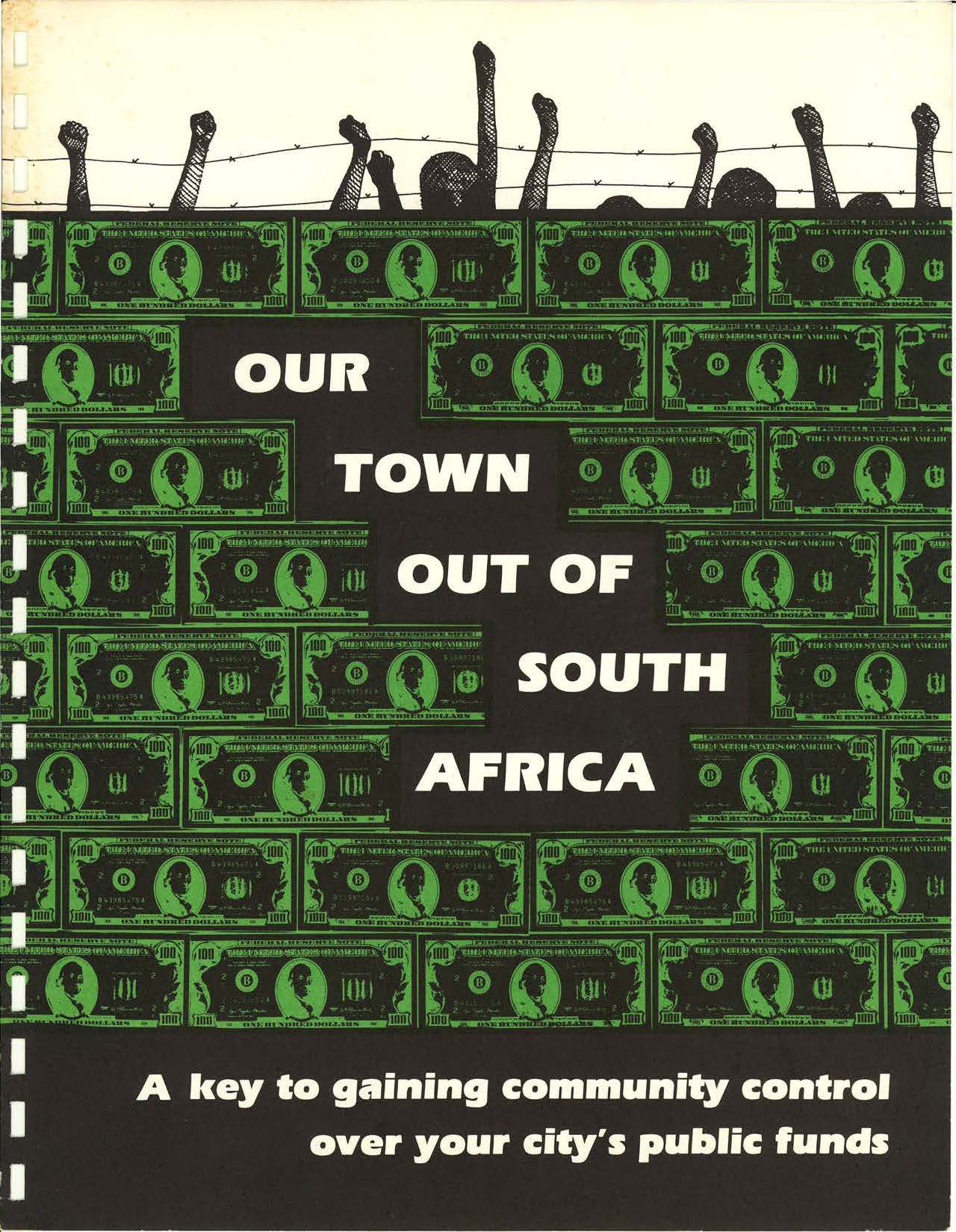
Page 1 of the Pamphlet, OUR TOWN OUT OF SOUTH AFRICA
Pamphlet

OUR TOWN OUT OF SOUTH AFRICA

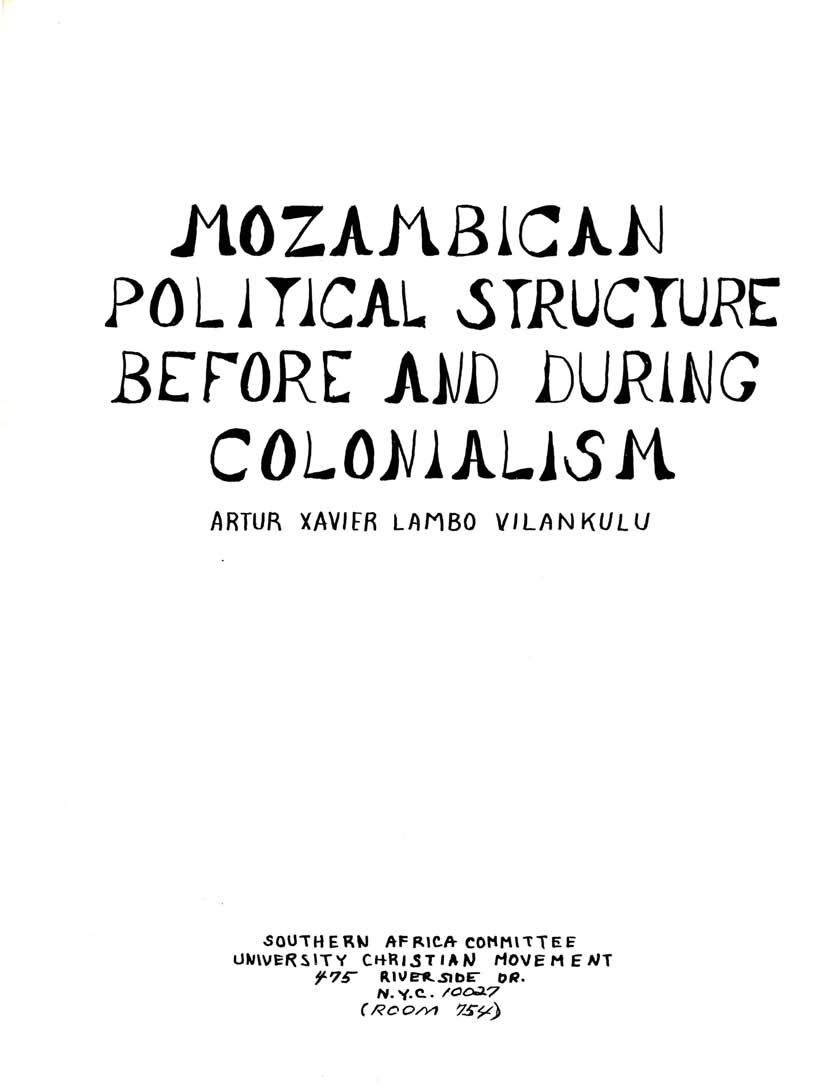
Page 1 of the Pamphlet, MOZAMBICAN POLITICAL STRUCTURE BEFORE AND DURING COLONIALISM
Pamphlet

MOZAMBICAN POLITICAL STRUCTURE BEFORE AND DURING COLONIALISM

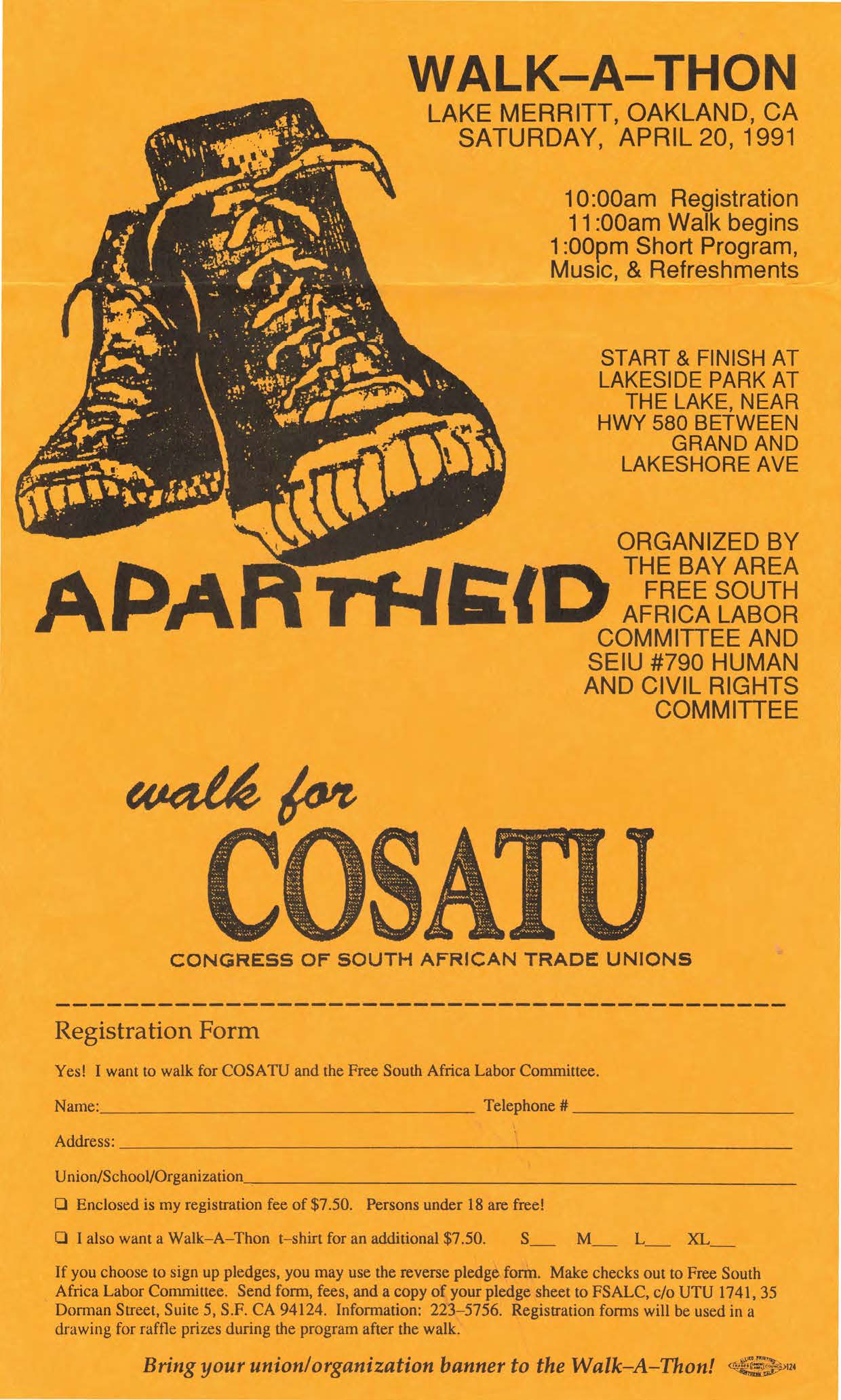
Page 1 of the Leaflet, WALK-A-THON
Leaflet

WALK-A-THON

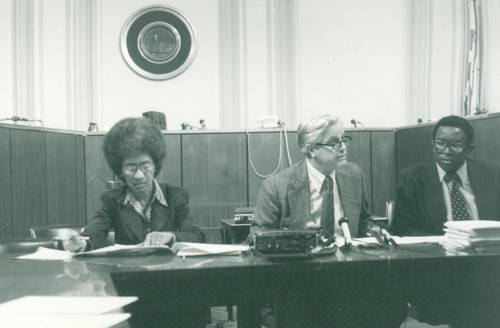
The D.C. Bank Campaign was launched on June 15, 1979 to oppose bank loans to South Africa. Washington, D.C. Councilmember Hilda Mason of the D.C. Statehood Party introduced a bill to prohibit the city from dealing with banks making loans to South Africa. Seen here addressing a meeting on bank loans is Councilmember Mason; Edgar Lockwood, Executive Director of the Washington Office on Africa; and Dumisani Kumalo, national coordinator of the Committee to Oppose Bank Loans to South Africa.
Photograph

D.C. Bank Campaign

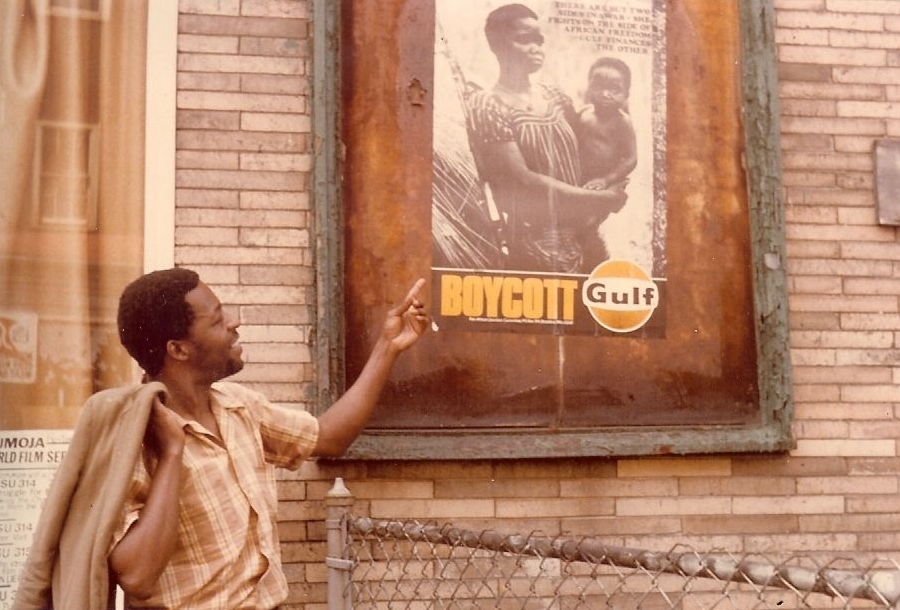
Chris Nteta of the Pan-African Liberation Committee (PALC) outside the Multiservice Center in Roxbury, Massachusetts in 1971 or 1972 with a Boycott Gulf poster produced by the Committee. Gulf Oil was exploiting oil in the Portuguese colony of Angola, providing Portugal with a large amount of revenue that it used in its war efforts against the liberation movements in its colonies (Angola, Mozambique and Guinea-Bissau). PALC sought to get people to boycott Gulf and for Harvard to sell its shares in the company. Nteta, A South Africa exile and then a student at Harvard Divinity School, remained a leader of the solidarity movement in Massachusetts until the end of apartheid.
Photograph

Chris Nteta, Pan-African Liberation Committee

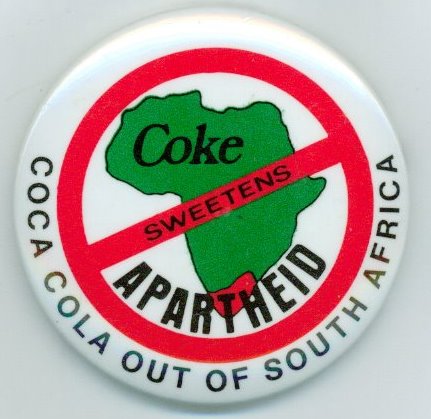
The round button features a green map of the continent of Africa, with South Africa in red. A red stop sign contains the word "sweetens" in the phrase "Coke sweetens Apartheid." The button was created by the Atlanta office of the American Friends Service Committee (AFSC), which coordinated the Coke Boycott Campaign. The button was produced by Donnelly/Colt Buttons in Hampton, Connecticut.
Button

COCA COLA OUT OF SOUTH AFRICA

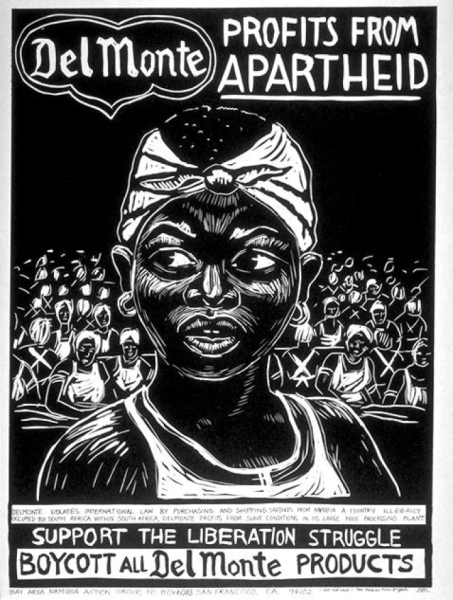
Del Monte, a California-based corporation, fished in Namibian waters. This poster was printed by Inkworks Press, Berkeley, CA. To view more posters in this collection, go to Inkworks Press poster archive. Size: 57x45 inches.
Poster

Del Monte PROFITS FROM APARTHEID

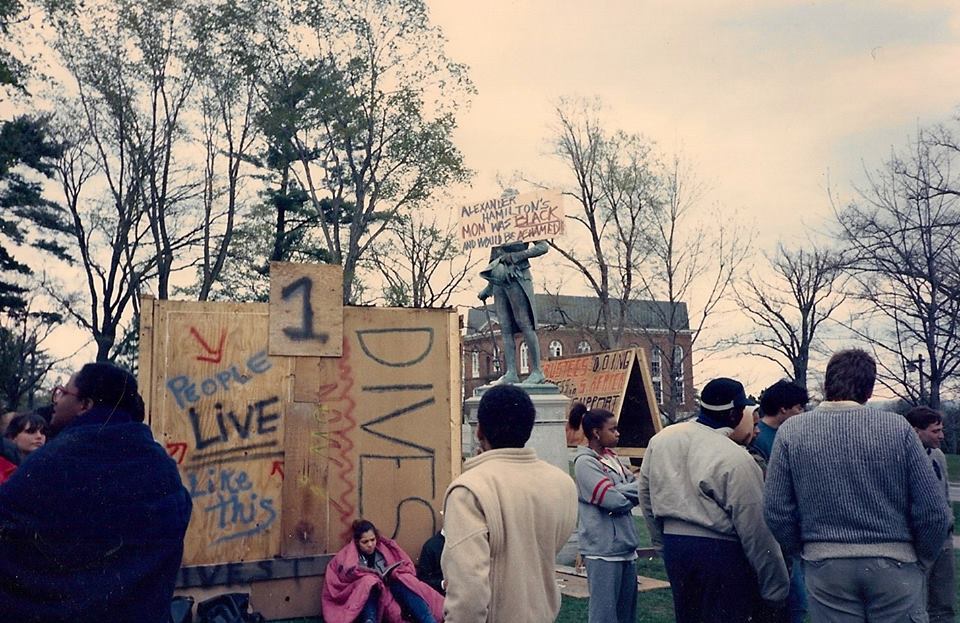
Anti-apartheid protest at Hamilton College with shanties, part of a campaign by Hamiltonians for Divestment to get the college to divest from companies doing business in South Africa.
Photograph

Shanty at Hamilton College
Previous Chevron Icon Next Chevron Icon
Facebook Michigan State University African Online Digital Library Matrix: Center for Digital Humanities & Social Sciences
Alternate Text Populated by JS